
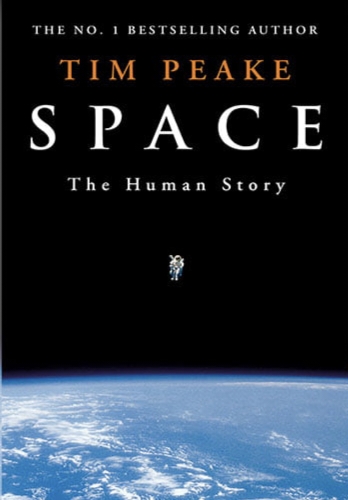
This is a book about the history of manned space flight told through the lives and stories, the accounts and experiences of the men and women who’ve made the journey to space, all the astronauts and cosmonauts starting with Yuri Gagarin.
It all began in the late 1950’s with the soviet launch of an unmanned orbiting satellite called Sputnik – a move that
showed the world that the Russians were far ahead of the Americans when it came to space technology. Seeing as this was a time when the cold war was at its height, the Americans scrambled for a response. This led to the founding of NASA, and a race was underway to send the first man into space. The Americans launched the Mercury program, and the Soviets launched the Vostok program.
The Americans launched the Mercury program, and the Soviets launched the Vostok program. The Americans chose seven astronauts from a pool of military test pilots, and the Soviets chose twenty one (the director of their space program wanted to have three times as many candidates as the Americans did). They identified the six best from the original twenty-one and decided that one of them would be the first Russian, and hopefully the first man to go into space.
Extensive preparations were underway on both sides of the iron curtain. NASA’s final choice was Alan Shepherd, while the Soviet Space Agency went with Yuri Gagarin. The United States, which lost out on the opportunity to put the first man in space by a mere three weeks, shifted its target to putting the first man on the moon.
They had a large pool of astranauts to choose from. Why did they go with Neil Armstrong? It came down to his temperament. Armstrong had an accident while training with the LLTV which was an earth-bound mock-up of the lunar lander. This was an unreliable vehicle that some of the astronauts had dubbed the flying bedstead and the belching spider. Things went wrong, and he had to bail.
He got out of the vehicle two-and-a-half seconds before it exploded. He was a bit winded when he landed, but he was miraculously unhurt. Less than an hour later, he was in his office doing paperwork and responding to anxious queries with a shrug, as if to say, stuff happens. His unflappability endeared him to the NASA top brass. His all-American good looks didn’t hurt either.
This book is full of fascinating details like this. In the first chapter, for instance, Peake writes about the very first astronaut recruitment program undertaken by both the US and the Soviet Union, even including how the words astronaut and cosmonaut were chosen to describe who these men were going to be, and what they were going to do. We assume that the words always existed, but they didn’t. They were names adopted (from Greek root words) to describe a new thing. NASA debated over which of these words to use and went with astronaut, meaning sailor of the stars. The Soviets, chose to go with cosmonaut, which means sailor of the cosmos.
We assume that the words always existed, but they didn’t. They were names adopted (from Greek root words) to describe a new thing. NASA debated over which of these words to use and went with astronaut, meaning sailor of the stars. The Soviets, chose to go with cosmonaut, which means sailor of the cosmos.
While covering the history of manned space flight, Peake also looks forward to the future, to the Artemis missions which will be the first manned missions to the moon in over fifty years. The narrative is not linear or chronological and that, somehow, makes it better. The book is organised in the order in which an astronaut experiences a mission, from the initial selection process to the training, to how crews are chosen for a mission, to the launch, take off, the mission itself, and then the return to earth with all the perils, accidents, disasters, triumphs and remarkable achievements that have characterised each of these stages through the history of space flight.
Tim Peake is an astronaut himself, and he’s been through the entire process, so he brings a personal perspective to a lot of what he writes about. His writing has an immediacy that brings all these people and all of this history alive. While the book is full of details, they are skilfully worked into the narrative which does not flag at any point. He covers so much ground and does it with an ease that’s commendable. I’m a space history nerd. I’ve read and loved several books on the subject, and I can tell you that this book is right up there with the best of them.
 between the pages