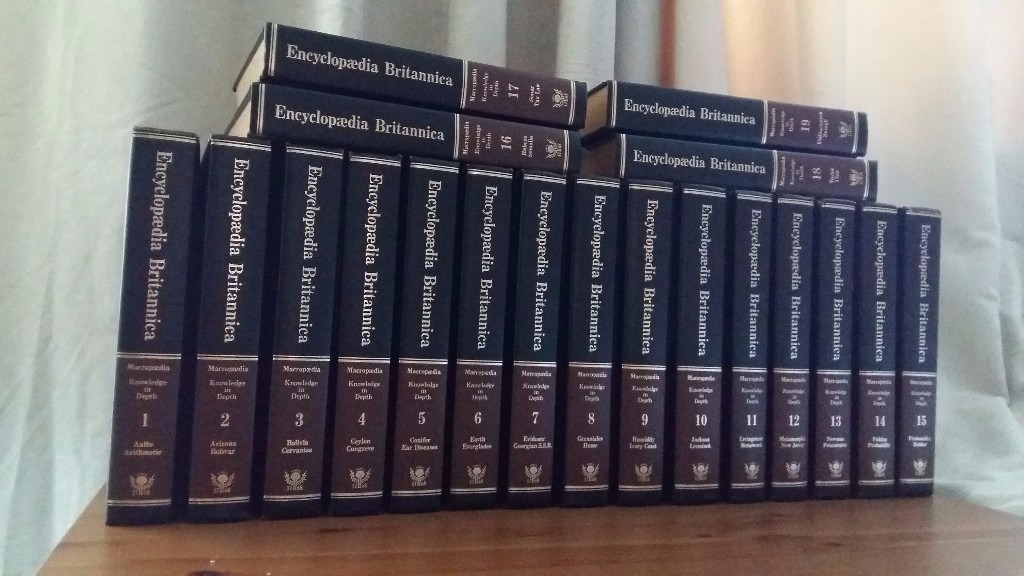
The Encyclopaedia Britannica has stood as a towering monument to human knowledge for over two hundred and fifty years. First published in Edinburgh in 1768, it grew from a modest three volumes to a vast compendium spanning dozens of volumes at its peak in the 20th century. The Britannica’s origins were humble. It was conceived by two men, Colin Macfarquhar, a printer, and Andrew Bell, an engraver, who envisioned a comprehensive resource, compiled by a group of gentlemen scholars.
It was to be an European take on the great Arabic encyclopaedias of the Middle Ages. Its founders, sought to compile a “dictionary of arts and sciences” that would serve as a comprehensive reference work. Little did they know their efforts would produce what many consider the greatest English language encyclopaedia ever created.
The Britannica has expanded its scope and reputation with every successive edition. By the nineteenth century, it was a cornerstone of scholarship, attracting prominent figures to contribute articles. The ninth and eleventh editions are considered landmarks, praised for their scholarly depth and engaging writing style.
Since its founding, the Encyclopædia Britannica has relied upon both outside experts and its own editors with various subject-area proficiencies to write its entries. Those entries are then fact-checked, edited, and copy-edited by Britannica’s editors, a process intended to ensure that the articles meet their long-held standards for readability and accuracy. The same team of editors regularly revise and update existing articles to reflect new developments in those realms of knowledge.
Over successive printed editions, the Britannica has chronicled the exponential growth of human learning and inquiry through the Age of Enlightenment, the Industrial Revolution, and the modern era. Its pages boast of contributions from eminent thinkers across every field – Einstein, Freud, Marie Curie, and more.
By the mid-twentieth century, the Britannica had become a household name and status symbol, adorning the bookshelves of families, libraries, and institutions worldwide.
Then came the digital revolution and the rise of the internet. Suddenly, the Encyclopaedia Britannica’s curated, meticulously edited knowledge had immense competition from websites, databases, and online communities with far lower barriers to publishing. In the late 1990s and 2000s, the once-mighty print set looked increasingly like a throwback to a bygone era.
But the Britannica persisted through the digital transition, adapting its timeless mission to a new medium. Today it exists as a cutting-edge online reference source unbounded by the limitations of print, while upholding its honoured traditions of academic excellence. While the format may have changed, and the competitors multiplied, the Encyclopaedia Britannica endures as an irreplaceable cultural icon – a vital link connecting past and present human knowledge. Its legacy will continue to inspire truth-seekers for generations to come.
 between the pages