Many people today do not know who David Grayson was, but in the early 20th century he was one of the most famous writers in America. His work featured tales of his simple, rural life in Amherst, Massachusetts which appealed to people across the country. He first wrote essays that were published in The American Magazine, and due to their popularity, these essays were then compiled into books including Adventures in Contentment, Adventures in Friendship, In Search of the Simple Life, and Adventures of David Grayson.
However, the name David Grayson was a pseudonym, and for years, fans across the country were fascinated with the mystery of who he actually was. One reporter declared it the great literary mystery of the decade.
Readers of his books sent many letters and notes to David Grayson over the years. They viewed him as a friend, even addressing him in their letters as such. Strangers around the country felt a kinship with him. Many people simply wrote to tell him that they enjoyed his work. Once, he went on vacation and a reader wrote to the editor telling them to not let David “take too long a vacation, some persons ought to spend their whole lives doing nothing and there are others we can’t afford to let take a vacation. They’re needed too much!”
Fans of Grayson’s work lived across the country. In Sarasota, Florida a group of people who loved his books formed a club called The Graysonians. They described themselves as the quiet and kindly folk who find their adventures along the paths of every day. The purpose of their club was to study nature and enjoy the open air in the friendly spirit of David Grayson. Clubs dedicated to nature and leading a simple life, began springing up all over the country.
In February 1915, a man arrived in Denver under the name David Grayson. Over ten days of staying in Denver he had run up a $50 board bill, befriended prominent men, and was entertained on Capitol Hill. Reporters contacted Grayson and his editors and were told that “any man lecturing in Denver or anywhere else asserting that he is David Grayson… is an imposter…David Grayson is a pen name.”
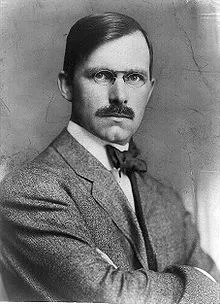
Bowing to public pressure, the identity of the man behind the pen name was finally announced in The Bookman, in March 1916. Newspapers across the country talked about the “unmasking” of David Grayson. There had been many guesses as to who David Grayson was, but as one report said, nobody thought that the fire-eating muckraker, Ray Stannard Baker, could write anything so mild and spiritual.
Ray Stannard Baker was an investigative journalist, who was known for writing articles about racism and labour unrest in America. He was born in Michigan in 1870. He started his reporting career in Chicago before moving to New York City to work for McClure’s Magazine. In 1906 he founded The American Magazine along with Ida Tarbell, and Lincoln Steffens.
When the magazine needed more articles to fill their pages, Baker agreed to write popular essays. To separate his more serious journalistic articles from the popular essays he adopted the pseudonym, David Grayson. In 1910 Baker moved to Amherst, reflecting the Graysonian dream of the rural life.
He supported the presidential candidacy of Woodrow Wilson and became close to the man. He was the Director of the Press Bureau for the American delegation to the Paris Peace Conference after the first world war. Baker was later selected as Wilson’s official biographer. He wrote Woodrow Wilson, Life and Letters and won the Pulitzer Prize for the Biography in 1940. He continued writing as Grayson through his life.
 between the pages